APC Helps Fund Hunt for Nitrogen Sources
by Vay David and Kimberly Barbour, CCESC
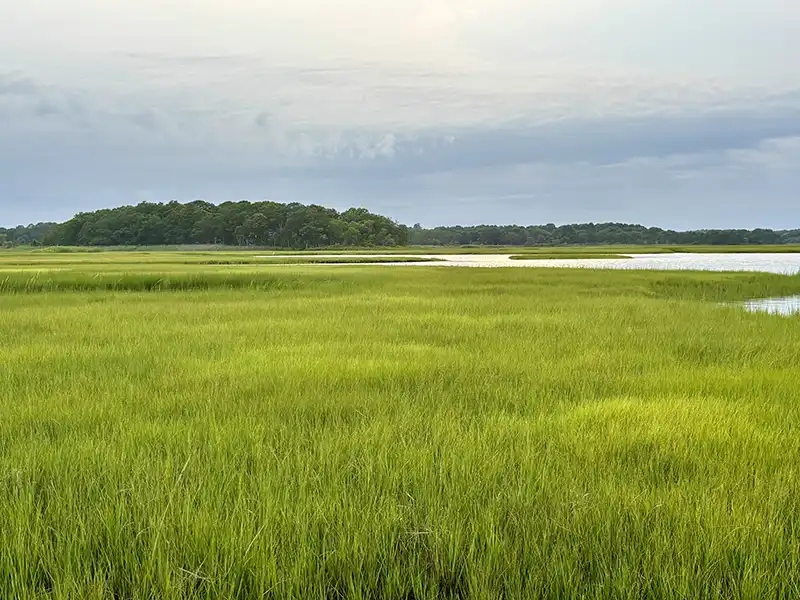
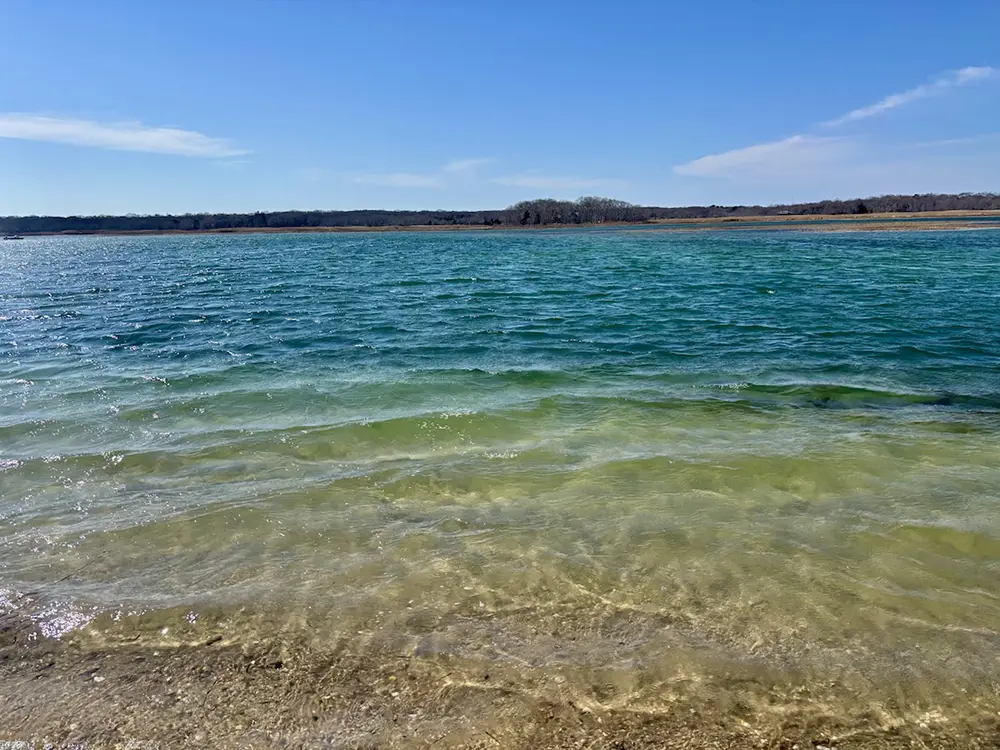
It’s no secret … excess nitrogen is having a serious negative impact on smaller bodies of water like our own Accabonac Harbor. With this in mind, APC has contributed funding to an important project, “Locating and Quantifying Groundwater-Derived Nitrogen Seeping into Selected Surface Waters of Accabonac Harbor,” being conducted by Cornell Cooperative Extension of Suffolk County. APC was happily able to supplement East Hampton Town’s funding for the project, which Kimberly Barbour, CCE’s Marine Program Outreach Manager, has described below.
Groundwater enters waterways through submarine groundwater discharge (SGD) points (Figure 1). CCE recently compiled preliminary measurements of nutrients in the Pussy’s Pond/Accabonac Harbor complex using SGD sampling and measurement equipment (Trident Probe and Ultrasonic Seepage Meter). The results revealed high concentrations of nitrogen entering the Pond and Harbor at several locations. With these nutrient source areas identified, the next steps are to further quantify nutrient loading into Accabonac Harbor from Pussy’s Pond and associated SGD zones—and to test remediation potential in the area.
Ideally, actions should be taken to improve the quality of groundwater seepage in the long-term, including upgrades to septic systems within the watershed, but more immediate actions—the bioextraction of nitrogen from the system using seaweeds (macroalgae) and installation of near-shore permeable reactive-barrier treatment cells (PRBTC)—can ease the short-term nitrogen load. CCE is committed to seeing that all efforts to identify and remediate pollution are quantified and that the most efficient and effective method of alleviation is identified and utilized.
An important component of this type of project is educating the public regarding the efforts that the Town of East Hampton is taking to address nutrient pollution in their waterways and what steps they can take to help improve water quality. The potential for local carry-over uses of the seaweed produced by this project, including for food/feed, compost, agar etc., is also being assessed. A final report will be completed in the near future.