20% of CPF Can Flow to Water Quality!!
by Jorie Latham
There was a real bright spot in November’s election: Proposition 1 passed exuberantly, extending the collection of Community Preservation Funds to 2050 and amending the law to allocate 20% of monies collected in any year to water quality programs. This provides a very exciting opportunity for participating East End Towns to be able to tackle the very serious issues threatening the quality of ground water and surface water.
Any project being considered will be brought to an advisory committee (similar to but not the same committee that has been in place to consider land acquisition). Public hearings will be required before any funds are distributed.
Very quickly, the Town began to consider using some of the funds to help pay for improved nitrogen reducing septic systems, especially within the watersheds of bays and harbors, like Accabonac. That will certainly be one good use for the CPF, but we are hopeful that more research will be funded to identify where help is most needed, and how we may deal with the pollution that is already a threat. The technology of nitrogen reduction is developing rapidly now that many communities recognize the peril of allowing the problem to continue. So better systems may soon be available.
There is clearly a great need to do what can be done to prevent nitrogen and other pollutants from getting into the system, but there is also, and more urgently a need to deal with the nitrogen that is already borne in the flow of groundwater from septic systems toward our water bodies.
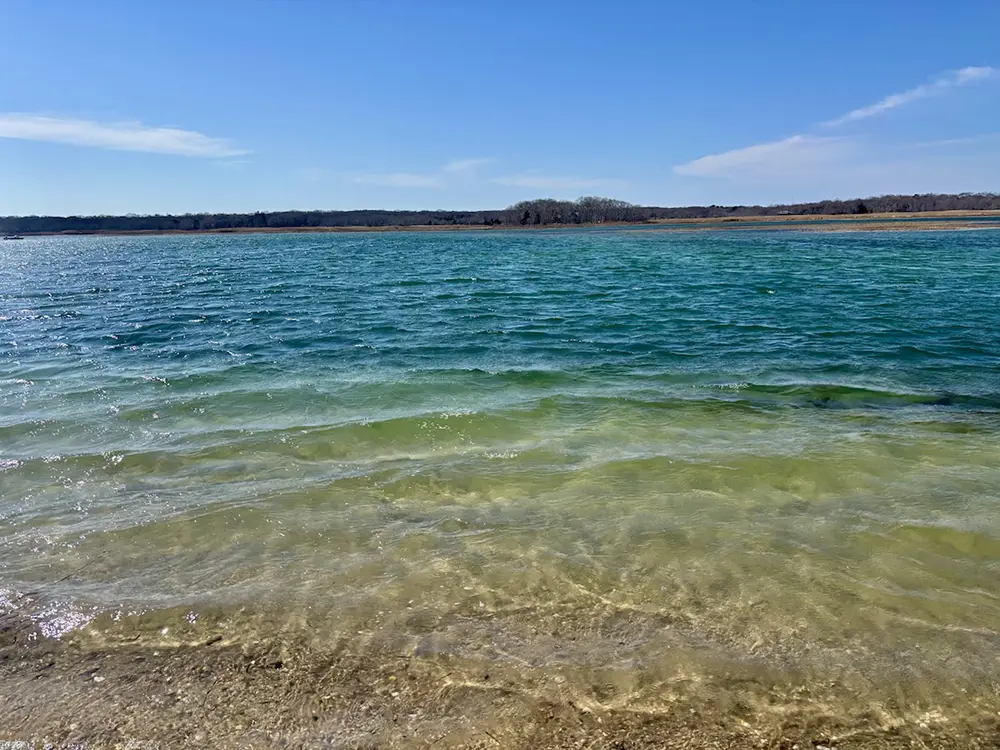
APC is pleased to be helping support an ongoing study by the Marine Division of Cornell Cooperative Extension, which builds on the work they started in Pussy’s Pond, now the site of what appears to be a small beach. This is actually where PRBs (Permeable Reactive Barriers) have been installed to keep nitrogen from entering the pond by sequestering it in layers of wood fibers until it is released as harmless gas in the atmosphere.
The study is continuing along the creek, seeking other places where the input is greatest and identifying the next location for similar remediation. We feel that this is just the sort of project for which CPF Water Quality money would be best used.