What’s New, Pussy’s Pond?
by Michele Carlson, Carlson Design and Planning
You may be wondering what’s going on at Pussy’s Pond Park—and why??
Earthwork and materials for erosion control have reshaped the landscape! Strange flags flap in the wind to keep hungry birds from eating recently added native seeds and plants! Fences have blocked it off!No one’s been inside (except some Spring School classes for planting, water testing and learning that inspired their student opera, Beyond the Duck Pond). It’s all there to protect emerging vegetation from infancy to maturity.
After weeks of watching closely, it finally happened in mid-March… the first fuzzy gray catkin, symbol of spring’s arrival, popped open. Hooray! Many more pussycat-soft catkins will follow. These are flowers of the willow group, and queen of them all is the catkin fondly called Pussy Willow. Several willow species, plus dozens of other native plants, now inhabit formerly bare or sparse zones in the park. Catkins provide valuable early nectar sources for bees during their leanest season. They are also solar-fueled powerhouses for strengthening shorelines and cleansing pollutants that afflict Accabonac Harbor.
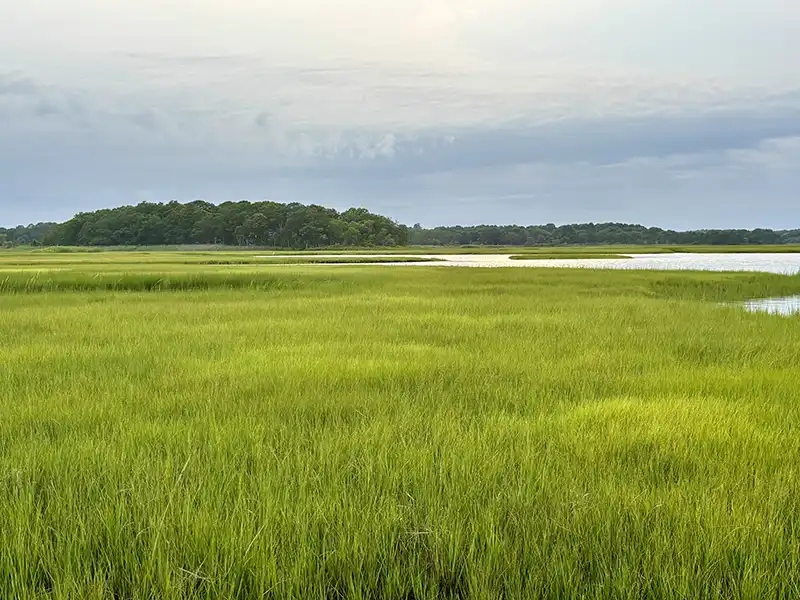
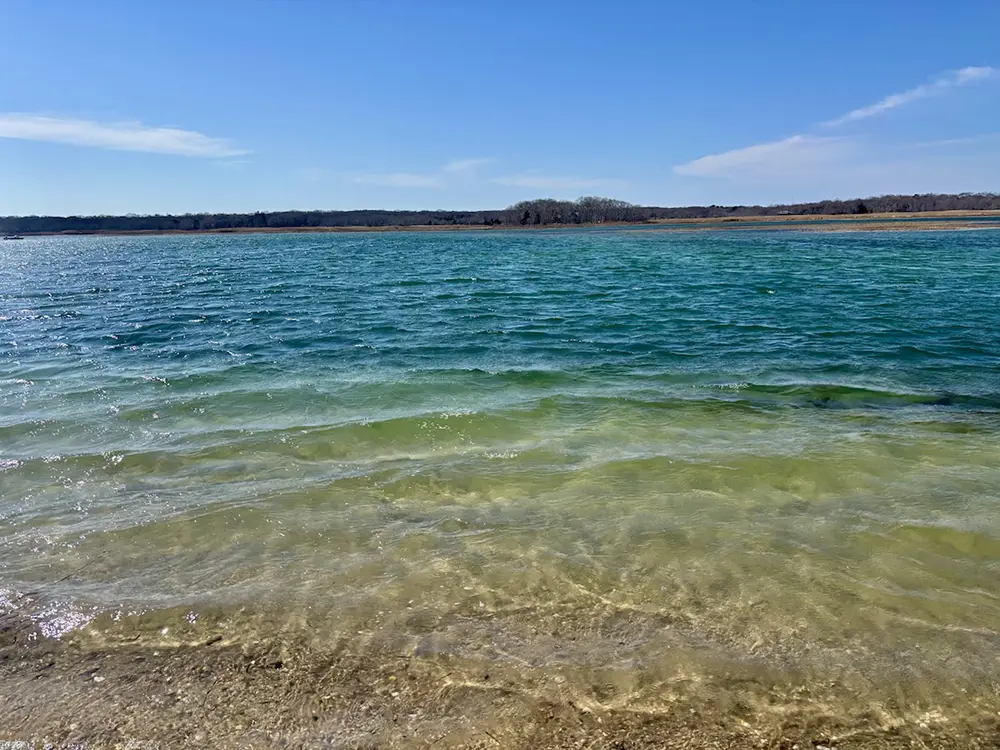
Pussy’s Pond lies at the head of Accabonac Harbor, a crown jewel of East Hampton for its beautiful salt marsh habitats and abundant birds, fish and shellfish. Close to Springs Elementary School and visited (and loved) by many, it is perfectly positioned to embrace and demonstrate modern practices for coastal land stewardship.
A previous study documented Pussy’s Pond as a high priority site threatened by water quality problems. Specifically, nutrient and bacteria levels in the pond posed human health concerns and also problems for aquatic life. Though many families visited there, the water was unsafe for human contact, and the many treading feet of kids and ducks had obliterated plants that are important to bind and secure the shoreline. The site had literally lost a lot of ground over the past 20 years.
Carlson Design & Planning was hired by the Town last August, using grant funds the Town had received, to design and implement measures to restore a resilient shoreline zone in the park. With that in mind, the Town chose four targeted restoration measures for use at Pussy’s Pond, illustrated below.
Restoration strategies address the gap between what currently exists and what can be healthy and resilient in the future, to help the site repair and continuously regenerate itself. Using natural system strategies, it’s possible to manage the landscape so it is not only a beautiful and people-friendly place, but also one that supports thriving biodiversity and healthy water quality. In the case of Pussy’s Pond, the eroding shoreline, invasive species, abundant waterfowl activity and stormwater runoff from the roadways all contributed to poor water quality. Also, single-family septic systems are never very efficient and often are poorly maintained, resulting in bacteria-laden groundwater seeping toward and breaking out in the park. Situated on a sliver of land nestled between housing-lined roads and Pussy’s Pond, the park was simply being asked to do too much with too little.
As spring continues to bring new signs of life to Pussy’s Pond Park, the important work there will become more visible and lovelier. While the exact date fences and flags will come down is uncertain, the goal is for late June. Evaluating plant growth and vulnerability will guide this decision. In the meantime, thank you for your patience, your interest and a big thank you to the students and teachers who helped plant the buffer—their eagerness in becoming ecological stewards of local waterfronts is admirable. Using your elementary school opera project to spread the word that ducks and other birds are best to admire without feeding them was awe-inspiring.