Phytoremediation
by Cile Downs
In case you haven’t heard of it, this is a good time to learn about phytoremediation: from phyto (plant) and remediate (fix or cure) — it means using plants to clean up pollution.
The most amazing things can be accomplished by green, growing plants, which can collect or even actually digest a great variety of pollutants, from radioactive substances, petroleum and heavy metals to elements like nitrogen that are normal food for plants. New ways to apply these biotechnological methods to various pollution sites are constantly being discovered; for instance, radioactivity at Chernobyl is being absorbed by growing sunflowers.
Our groundwater is increasingly polluted in Long Island, famously with agricultural chemicals where there are farmfields, or lawn fertilizer and pesticides wherever citizens misguidedly try to achieve the perfect lawn. The inevitable consequence is pollution of our creeks and bays. Accabonac Creek has deteriorated alarmingly in recent years, probably more from nitrates leached into groundwater from septic systems than anything else. The nitrates are known to encourage algae blooms that have more or less eliminated the eelgrass that is an indicator of the healthy conditions necessary for shellfish. It behooves us to campaign energetically for the development of solutions, especially in absence of any really successful, and affordable, new septic tank devices.
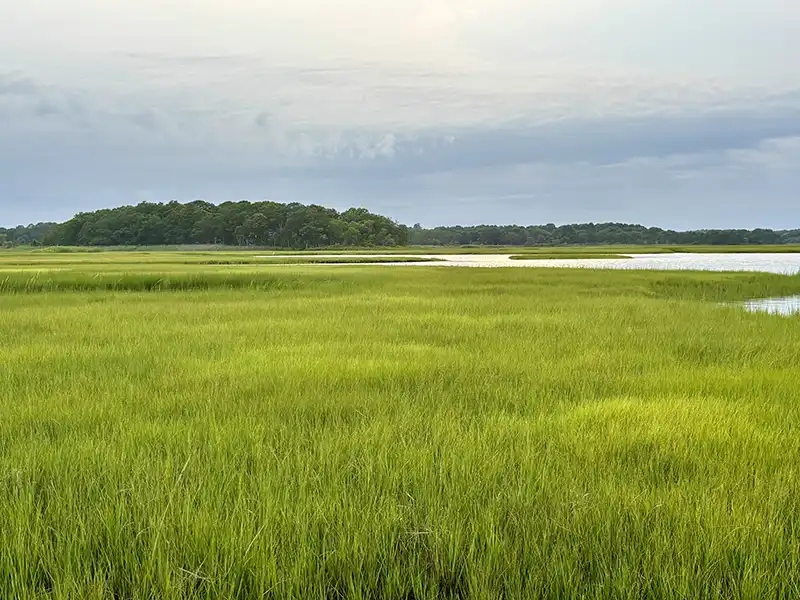
We’d like to see some experiments in the use of plantations of willows and poplars, which have been used effectively around areas where pigs or cattle have produced massive nitrate pollution. These plants willingly grow right into water to collect their nitrates. Or, has anybody tried wild grasses, whose roots are said to reach incredibly deep? It is hard to believe that the buffer areas favored by the DEC between lawns and salt marsh could not be doing a fine cleanup on groundwater on its way to the marsh. And salt marsh itself is said to be one of the world’s finest pollution cleaners, its only drawback being that the polluted run-off has to flow onto the marsh and not seep into the Creek at a deeper level.
Speaking of levels, it has been suggested that leaching fields for septic systems may be superior to the customary rings, due to being set higher in the ground, thus giving tree, shrub or grass roots more chance for grabbing nitrates from effluent as it makes its way down to groundwater.
Last year this newsletter carried a complete run-down on good septic system function and how to promote it, by Nick Bryan. We all need to know as much as possible about this subject, and it is important to encourage research into remediation for the unavoidable pollution that happens even with perfectly functioning systems. Stay tuned.