Accabonac Memories and Musings
by Ralph Carpentier
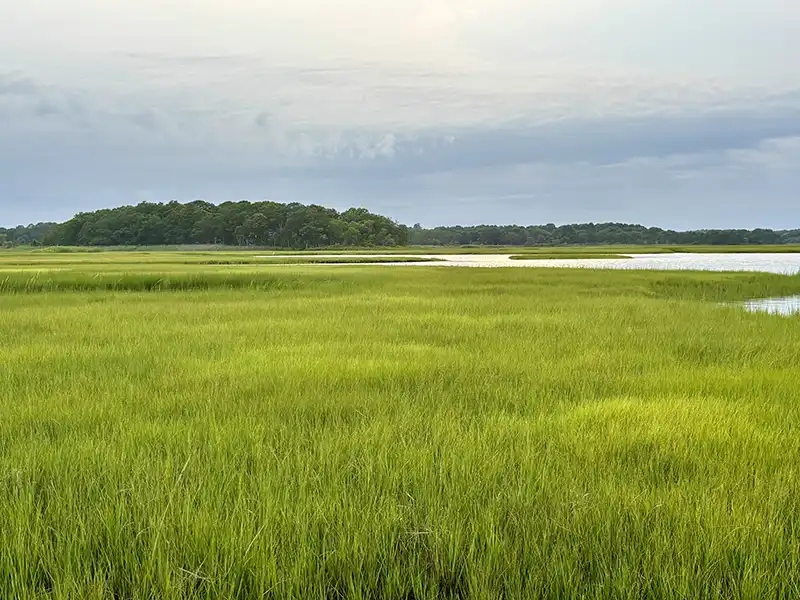
I’ve lived in Springs for over fifty years and learned much history and lore about this place from friends and neighbors and from my own experiences and observations. Springs is, in my view, the most interesting hamlet – primarily because of the marine environment that surrounds it on the north and Gardiners Bay on its eastern side. But mostly it’s because the hamlet has Accabonac Creek at its center.
The Creek’s contribution to the economic history and life of the people was essential before its geography became altered and impacted by humans. Dear old Nat Smith once told me that there really was a shipyard on Shipyard Lane – there must have been deep water there to support that commercial industry.
And Accabonac Creek was a most important nursery of fin and shellfish as well as a good breeding ground for the mosquito larvae essential to finfish sprat growth. Northeasterly storms would flush saltwater through the flats of Gerard into the Creek; fish and shellfish deposited in Gardiners Bay were also flushed into the brackish waters of Accabonac.
“Accabonac kept Springs alive during the Great Depression” is a major saying among baymen I’ve known. I don’t doubt it, given the Creek’s undisturbed riches at this earlier time.
The appeal of waterfront property on Gardiners Bay was the beginning of the end. The new causeway to Gerard Point made it possible for speculators to establish 50-foot lots on Gardiners Bay, and that ended the saltwater flush of fin and shellfish, eggs and spawn into Accabonac.
The next problem? Mosquitoes. This important finfish nursery food source didn’t suit a “waterfront paradise.” My old friend Bob Vetault told me that his uncle worked at the bunker factory at Deep Hole and had to row to work draped under mosquito netting to get to Gerard Park. But it wasn’t long before people found the “solution” to the problem – drain off the brackish waters by trenching all the wetlands in the entire township, combined with annual spraying of insecticides.
All the trenching caused runoff of a dense silt that devastated clam beds. I used to moor a Sharpie at the north end of the Creek. Since it was shallow there, my plan was to wade out to my boat when necessary – but my boots sank into a foot or two of black silt. It wasn’t a great bottom for marine life to spawn and grow.
Relocating this channel produced another example of “solutions” that have harmed the ecology of the Creek and created problems that are too expensive or difficult to solve. Some locals saw and objected to what was happening to Accabonac back then but, regrettably, didn’t unify in time to overcome speculator greed and the regional power structure of the times.
I confess – I miss catching a mess of blue claw crabs and scallops from the past riches of Accabonac. Even more, I regret seeing again and again – in the Creek’s demise – the ignored message that we truly must live in harmony with nature.