Water Quality Updates for 2026!
At APC’s September chapter meeting at Louse Point, and in many conversations since, you’ve heard us talk about the need to upgrade septic systems around the harbor and rethink how lawn fertilizers affect our precious groundwater. This newsletter brings the thinking and evidence behind these talking points to life and unpacks the details around how your vital contributions are being used to benefit the health of the harbor. Each direct action taken, thanks to you, is both rooted in research and strengthened through collaboration with our trusted partners, including the Cornell Cooperative Extension and other local organizations.
Together, these collaborations reveal something powerful: local residents play a real, measurable role in protecting Accabonac Harbor and the surrounding environment.
Read on below as we unpack what the science shows and what it means for our community.
What It Is
As many of you know, the Accabonac Protection Committee (APC) has invested significant time and resources in an ongoing collaboration with the Cornell Cooperative Extension (CCE) of Suffolk County to monitor the groundwater quality in Accabonac Harbor. We have worked closely with Dr. Molly Graffam of CCE on this long-term effort to protect Accabonac Harbor’s water quality and have currently committed $15,000 from your generous donations to CCE for 2026 to study the northwest section of the harbor.
Below is a brief recap of our work with CCE to date and where we are headed – with your help – in 2026.
Where We’ve Been
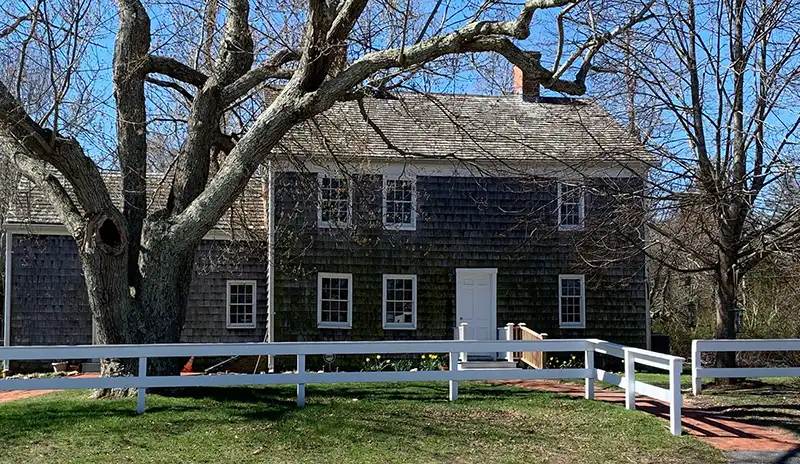
CCE – in a pilot program funded by APC – first measured pollutants entering Accabonac Harbor via submarine groundwater discharge in 2016. These early results revealed elevated nitrogen concentrations along the western shoreline of the Springs General Store (SGS) property. Subsequently, CCE installed six groundwater monitoring wells, up to 40 feet deep, along the western edge of the SGS property.
Findings
Initial testing revealed elevated ammonium concentrations. Across all wells, ammonium concentrations generally increased with depth, peaking at approximately 35 feet below ground surface. That’s our groundwater.
Based on those results, it was unlikely that the Springs General Store itself was the source of contamination. Instead, the proximity of the Springs School and nearby residential neighborhoods suggested these areas may have been contributing factors.
Upshot
In early 2020, the Springs School put into operation an innovative/alternative onsite wastewater treatment system (I/A OWTS) that had been installed in the fall of 2019. This was an important step in protecting Accabonac Harbor’s overall water quality.
However, years of follow up monitoring confirm that nitrogen-rich water continues to seep into the harbor’s surface waters. Water that is contaminated by these pollutants is harmful to both fish and aquatic life through the development of algae blooms that starve their oxygen. Excessive nitrogen also produces toxic algae which is harmful to humans. We’ve seen this level of oxygen-starved habitats over the years in both Georgica and Sag Ponds. Protecting Accabonac from this fate is our utmost concern.
One solution has been the installation of Permeable Reactive Barriers (PRBs) that have been shown to reduce nitrogen levels in water outflows by up to 80 percent. At least one PRB has been installed on the shoreline of Pussy’s Pond and the General Store area. Other experimental nitrogen remediation efforts include kelp and oyster farming.
Studies consistently identify the primary sources of nitrogen in groundwater to be fertilizer use (residential and agricultural), and septic systems.
As noted in the CCE 2023–2024 Springs School Groundwater Monitoring Report:
“Reducing nitrogen at the source, such as reducing fertilizer application and upgrading septic systems to alternative systems which remove nitrogen and other contaminants, are highly necessary and will significantly reduce groundwater pollution in the future.”
Impact: Why It Matters
Accabonac Harbor lies within the Peconic Estuary and is currently classified as ‘an impaired waterbody due to pathogen inputs’. Approximately half of the harbor is either permanently or seasonally closed to shellfishing as a result. Beyond the known forms of pathogens such as run off from lawn fertilizers, the Suffolk County Subwatershed Wastewater Plan (SCSWP) has identified the harbor’s shoreline areas as needing septic system upgrades to protect the groundwater from leakage and further contamination.
Here are some numbers to give you an idea of the diminishing water quality in the harbor. According to CCE’s December 2022 Accabonac Harbor Phase 1 Report,
In 2021:
- 16.50 acres of the harbor were uncertified for shellfishing
- 14.62 acres were seasonally uncertified due to pathogen contamination
In 2022, the NYS DEC updated these figures in northwest Accabonac Harbor:
- 17.08 acres of uncertified shellfishing area
- 31.71 acres of seasonally uncertified due to pathogen contamination.
This increase indicates a growing or shifting pathogen load in recent years.
However, despite our heightened concern, there still remains a lack of detailed information regarding whether tributaries, mosquito ditches, and/or residential shoreline areas are the cause of increased nitrogen or whether its presence is due to pathogen-rich groundwater seepage into the harbor.
Which brings us to the next phase of our work with CCE.
Future Work: Next Steps
CCE has recommended our next steps to include an investigation of surface water and submarine groundwater discharge to better understand the sources, forms, and magnitude of pollutants entering the harbor. One area of primary concern is the northwestern edge of the harbor where we have committed the above-mentioned funding for CCE’s work in 2026.
The next phase of the study will help us understand and quantify pollutant loading along the shoreline. This study will, in turn, strengthen scientific justification for remediation, and help to guide the placement of future mitigation strategies.
Once Phase II of the study is complete, the data will be used to identify specific shoreline areas where replacing old septic systems with the updated alternative on-site wastewater treatment systems is necessary as well as other areas where use of permeable reactive barriers (trenches dug with mulch and iron embedded in them to ‘catch’ and filter the pollutants) and nutrient bioextraction techniques (strategies using cultivated shellfish and seaweed to absorb excess nitrogen from the water) would be most influential.
We hope that this remediation effort excites you as much as it does us. We are inspired by the findings of our work with CCE thus far and focused to move forward into the stages of impact and remediation.
In a Nutshell
Through our partnership with CCE, APC understands that reversing water quality impairments will require a combination of management and remediation approaches as mentioned above. We are committed to seeing these efforts through – and with your support – we can continue protecting the health and future of Accabonac Harbor.
Please donate today to support the APC’s ongoing efforts and protect the water quality of this beloved harbor.
We hope to see you soon!
Warmly,
APC Board members