Accabonac Harbor/Pussy’s Pond: Nitrogen Treatment Pilot Projects
Identifying and Remediating Groundwater Derived Nitrogen from Accabonac Harbor/Pussy’s Pond:
A Pilot Project Testing Two Treatment Methods
by Kim Manzo, CCE Marine Program Educator
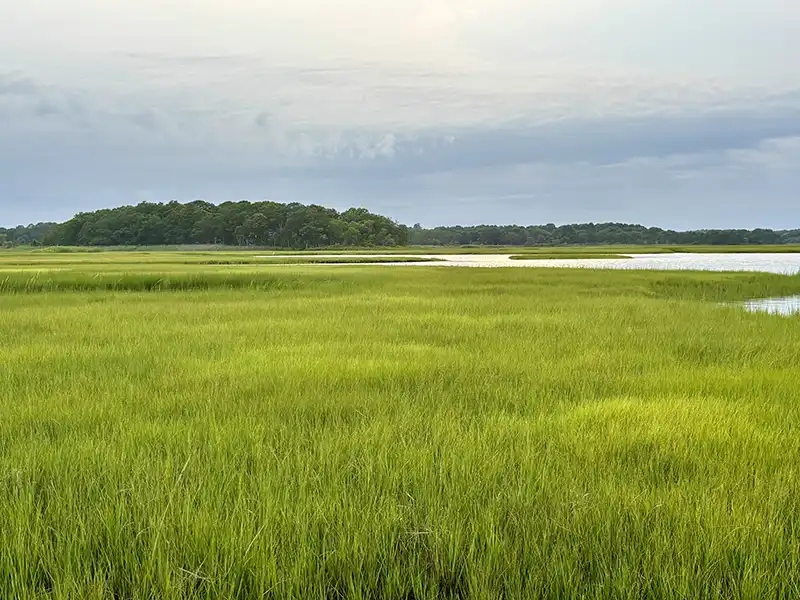
As mentioned in previous APC newsletters, Cornell Cooperative Extension will continue to zero in on where the most significant nitrogen loading is occurring into the Pussy’s Pond/Accabonac Harbor complex and will be testing two methods of remediation. Based on previous work conducted in 2016, funded by the APC and Town of East Hampton, results indicated that significant nitrogen enters the harbor from Pussy’s Pond, along the culvert connecting the pond to Accabonac Harbor, and along the south shore of the harbor north of Shipyard Lane.
One method of remediation that will be tested in this area will be the installation of near-shore permeable reactive barrier treatment cells (PRBTC), which is the method that was used along the “beach” area of Pussy’s Pond in 2016. This method of capturing nitrogen from identified near-shore groundwater seepage points has been proven effective and is becoming more widely used. Simply put, the PRBTC is installed directly over an identified seepage point, forcing the seeping groundwater through the cell containing natural wood fibers that sequester (and eventually release) nitrogen into the atmosphere as a harmless gas rather than into the waterway. This project is still in the permitting phase and more information will be provided upon commencement of work.
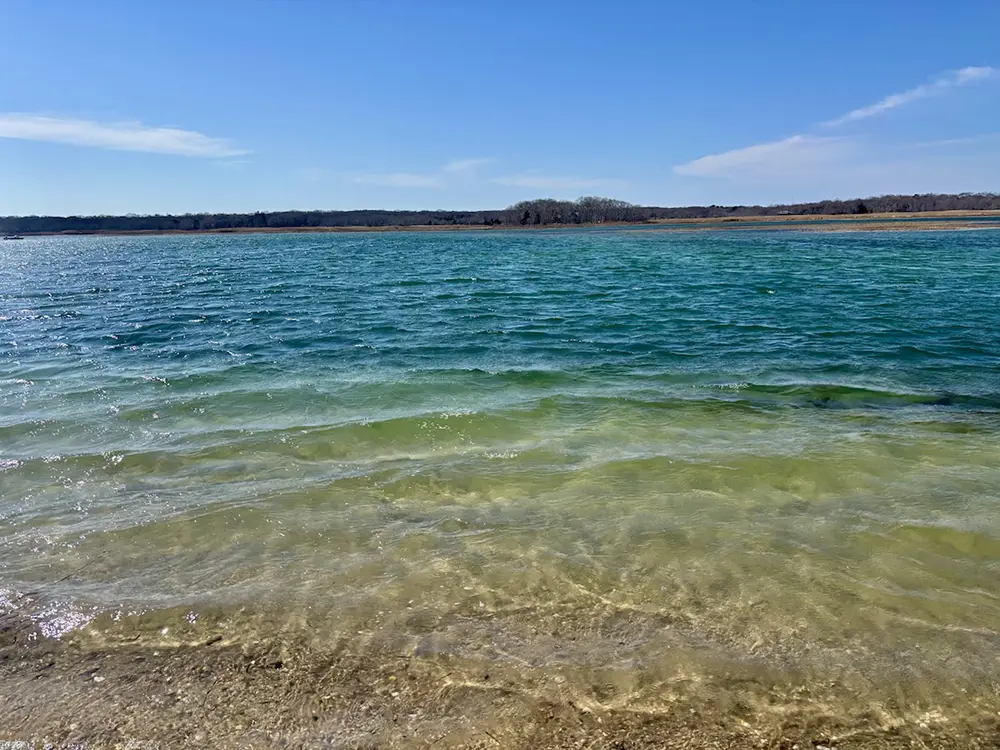
The other method of nitrogen remediation being tested is the controlled growth of seaweed (aka macroalgae) to bioextract nitrogen from the surface water of Accabonac Harbor, where the culvert draining Pussy’s Pond meets the harbor. This project was launched Monday and Tuesday (July 2nd and July 3rd) and will run for a total of three months. Growing seaweed in this area will help remediate nitrogen that has already entered the surface water from the pond, culvert and nearby seepage points. The idea is, by combining these two methods of point and non-point remediation, significant amounts of nitrogen will be bioextracted from the system.
The seaweed bioextraction experiments are slated to take place over the course of the summer 2018 between June and September. Locally sourced native stock of the macroalgae species Gracilaria and/or Ulva will be grown in an array that bisects the creek delta as well as over identified SGD points in the intertidal zone. Our native species of Gracilaria and Ulva are highly adaptable, tolerant of many habitat types and conditions, and are especially opportunistic at utilizing excess nitrogen for growth more so than other macroalgae species. The seaweed will be collected from within other areas of Accabonac Harbor, or from the closest available collection site in East Hampton, to ensure it is acclimated to local conditions. The seaweed will be pre-weighed and clipped to frames made out of vinyl coated steel frames (lobster pot material) that will serve as attachment points. As it grows, portions will be harvested weekly or bimonthly (depending on growth rates), weighed and tested for total nitrogen in its tissue in order to quantify the amount of nitrogen that was removed from the system over time using this method. Half of the frames will include additional mesh on top to protect from avian grazers while the other half will remain open to determine if there is a need for such protection.
The majority of the seaweed frames will be placed in an array at the mouth of the culvert in order to capture (intersect the flow path) as much of the effluent from Pussy’s pond as possible without restricting flow. A small number of seaweed frames will be placed over nearby identified SGD seepage points. The majority of the frames will contain Gracilaria; any frames placed intertidally along the marsh fringe will contain Ulva sp. which can best tolerate exposure at low tide (the species occurs naturally in the intertidal zone). Additional seaweed frames outside of the array will depend on identification of SDG zones and must not interfere with PRBTC’s deployed in the creek. A sign will be installed (possibly near the kayak launch site located adjacent to the Springs General Store) to inform the public about the project and to avoid any conflicts with recreational use of the area or interference with the experiment.
The ability of seaweeds to bioextract nutrients that would otherwise contribute to eutrophication and anoxia is being researched by scientists in our region as a cost-effective way to combat issues with water quality, but there is also the potential to boost local economies. The seaweed produced from aquaculture can be used for high-quality food products, biofuel, agar and carrageenan (thickening and gelling agents found in many products we use), fertilizer/compost along with many more potential uses. Successful businesses in Maine and Connecticut demonstrate that there is a market for such products in our region. This industry can also provide new employment opportunities or help local fisherman to supplement their income during their “off-season”. The final report for this project will include a plan for the harvested seaweed and will access potential local markets and carry-on uses for harvested seaweed. If you are a stakeholder interested in acquiring harvested seaweed to produce a specific product or products to be marketed locally, or have any questions about the project, please contact: Kim Manzo, 631-852-8660 ext. 34 or email kp92@cornell.edu.
Upcoming Events
July 10th for our “APC Health of Accabonac Harbor Forum” We are looking Forward to seeing you and have a fantastic panel Details for this event and others can be found on our events calendar.