Leave it to Nature – No More Methoprene
by Sean O’Neill, Peconic Baykeeper
On December 12, 2016, the Suffolk County Legislature once again voted to fund continued use of Methoprene by the Department of Public Works Vector Control to control mosquito populations. Methoprene, an insect growth regulator used in larvicide applications, is known to be toxic to fish and shellfish. APC and other environmental organizations have made impassioned arguments to ban or limit its use in the county for years; sadly, these pleas have fallen on deaf ears. Perhaps a different argument is needed.
Prior to becoming the Peconic Baykeeper (PBK) in May, 2016, I served as a pesticide control specialist for the New York State Department of Environmental Conservation for 6+ years, regulating the very vector control activity described above through permitting, site inspections of both ground and aerial sprays, along with writing violations when they occurred. I can state Suffolk County Vector Control (SCVC) always made their very best effort to comply with all environmental regulations.
SCVC’s position is that methoprene, a known toxicant that has been severely restricted in its use in our neighboring states of Connecticut and Rhode Island due mainly to lobster toxicity concerns, should continue to be used to mitigate human health concerns and the nuisance mosquitos pose. They argue scientific literature does not exist that directly correlates methoprene’s use to lobster or other shellfish die offs. They also believe much of the public thinks mosquito spraying is an important part of disease and nuisance control and requests its continuation. Though this may be a logical conclusion, it unfortunately leads to bad policy decisions.
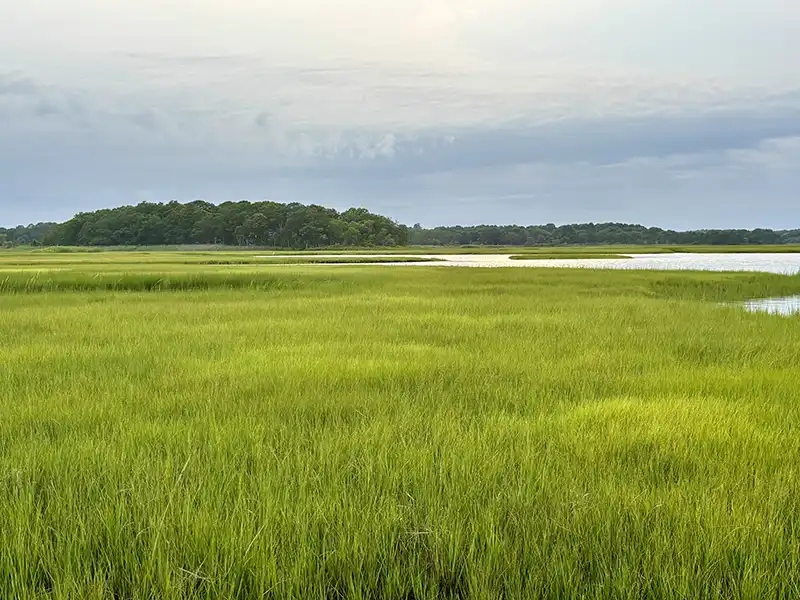
Suffolk County has spent decades—and millions of dollars—on mosquito control, with little demonstrable success. Coupled with previous decisions to disrupt marshland with mosquito ditches and bulkhead, we have created the very stagnant water conditions that lead to larger mosquito populations. Add in spraying that also indiscriminately kills mosquito larvae predators, and we learn that our vector control policies themselves have led to dying marshes unable to control mosquito populations naturally.
The Baykeeper program embraces the precautionary principle that, in the absence of complete scientific knowledge, we shouldn’t participate in activities that may cause harm. We know our marshes are in danger and under a broad assault from development, wastewater pollution, stormwater runoff and other pollutants. We know methroprene is toxic to marsh inhabitants that prey on mosquitoes. We know decades of spraying have done little, if anything, to control our mosquito problems. How about we try and let nature work?
Recently, SCVC has made great strides in marsh remediation as part of a holistic approach to vector control. Still, SCVC mainly is an entity armed with spray trucks and contracts for spray helicopters. What if, instead of appropriating money for spraying, we instead equip them to drastically increase their remediation of marsh habitat crucial for mosquito predators that will naturally reduce mosquito populations? This would have the added benefits of reducing erosion, increasing coastal resiliency to flooding, improving wildlife nursery habitat, creating more recreational opportunities for residents, combating sea level rise and improving water quality. In fact, this very work is given priority in SCVC’s own “Vector Control and Wetlands Management Long Term Plan.” We urge County Legislators to give SCVC the tools to solve the root of the mosquito problem—unhealthy wetlands—rather than continue to spend tax dollars on the ineffective Band-Aid of spraying toxic chemicals.