August 2020 Newsletter
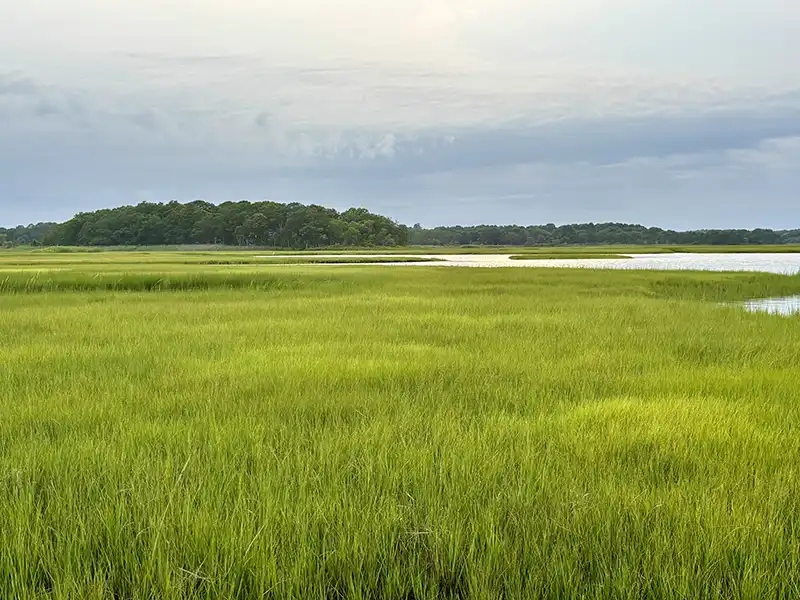
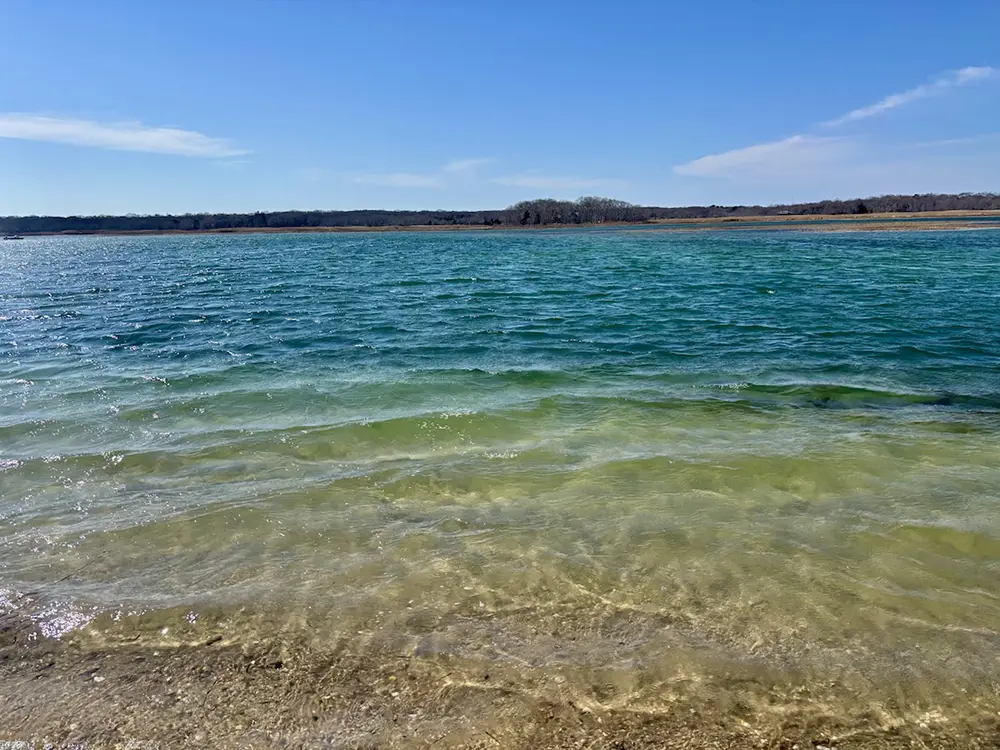
With sorrow we report the loss of one of the founders of APC. On August 8, Cile Downs departed this life as she wished: peacefully, in her home, facing her beloved Accabonac, after a long, full and productive life of art, activism, and devotion to the creek. There will be a more complete tribute to Cile in the coming weeks, for which we hope you will provide any memories and impressions of her that will enrich our efforts to honor her remarkable life and her extraordinary contributions to the
preservation and protection of Accabonac.
Jorie Latham
August 15,2020
Photo Credits: Jorie Latham
General Announcements
APC Special Newsletter Honoring Cile Downs
Please send your memories and photos to the APC email address by September 15th for inclusion in the October issue which will devoted to Cile. Our email is accabonacprotection@gmail.com
APC Events
1. Annual Meeting
Due to the pandemic, we will not have our traditional annual meeting. We will miss meeting at the home of John and Ann Mullen who have graciously hosted this event in prior years. The election of the Board of Directors occurs during the annual meeting, we will share details about this year’s election in September. The current board is Ira Barocas, Kevin Bishop, Loring Bolger, Nicholas Bryan, Patrice Dalton, Christine Ganitsch and Lisa Ruiz.
2. APC September Forum: The Future is Now
The two presenters for this forum are Dr. Christopher Gobler and Dr. Alison Branco. The presenters have graciously agreed to conduct this session as a Zoom meeting on Sept 16, 2020, 6-7pm. Look for details in our September newsletter and website.
“Decreasing Nutrients and Contaminants: Promising Technologies; Christopher Gobler, PhD.
Nutrients, such as nitrogen, as well as other contaminants are entering both our underlying aquifer system, from which all our drinking water is drawn, as well as our surface water bodies, including Accabonac Harbor. These contaminants come largely from waste water systems. Learn how new technologies are being developed to mitigate these effects.
Dr Gobler is the Director of the Center for Clean Water Technology at Stony Brook University and a Professor within the School of Marine and Atmospheric Sciences (SoMAS) at Stony Brook University. He is widely recognized as a leading expert in the field of plankton ecology, specifically regarding the effect of excessive nitrogen loading’s impact on the development of harmful algal blooms which have played a key role in the degradation of Long Island fisheries and water quality.
“Sea Level Rise: Focus on Accabonac Harbor”:Alison Branco, PhD.
Learn the science of sea level rise with a hyper local eye focusing on our backyard here in Accabonac Harbor.
Dr Branco is an oceanographer specializing and assessing human impacts on marine ecosystems. For six years, Dr Branco served as the Director of the Peconic Estuary Program. She currently holds the position of Senior Coastal Scientist and Coastal Director of The Nature Conservancy in NY.
3. Tour of the Night Sky: William Taylor, Hampton Observatory’s Senior Educator and NASA Solar System Ambassador, will lead a tour of the night sky at Ashawagh Hall on October 16th at 7:30pm. The presentation will be outdoors and limited to 20 participants. Social distancing will be in effect. Look for registration details in next month’s newsletter or on the APC website events page..
4. Other On-line Meetings
There are several online meetings in the near future that are not sponsored by the APC but are supportive of APC objectives: They are listed on the APC website calendar.
Salt Marsh Restoration through Runnels, August 20, 11-1pm. Recommend by Dr. Nicole Maher, presented by US Fish and wildlife and highly relevant to managing the Mosquito hot spots in Edwina von Gael’s essay that follows.
CCOM seminar on Microbial Source Tracking, USGS, Sept 10th 11:30-12:30
Tick Safe on LI, sponsored by Peconic Land Trust on Sept 17th, 6-7pm.
Environmental Policy
Plum Island
APC supports the effort to save Plum Island from auction. The Envision Plum Island Report is available on Savethesound.org. Visit the site and learn why this island should not be sold to the highest bidder. It is home to rare and endangered species, wetlands, shorelines and historic structures. While on the site, you can message Governor Cuomo and ask him to use his powers to stop the sale.
Leaf Blowers
The East Hampton Town Board will soon consider legislation on gas powered leaf blowers. The noise ordinance in East Hampton allows noise between 7 am to 8:30 pm with decibel levels that are difficult to enforce.The board will look at the village legislation and legislation from the town of Southampton as well as recommendations of the Energy Sustainability Committee. The public health issues related to leaf blowers are not trivial. They include noise, dust created that distributes spores, mold, allergies, plastics, green house gases and the risks to the workers who use the blowers.
This Month’s Articles
We have two wonderful articles this month. Edwina von Gal writes about her experience as a Citizen Scientist collaborating with vector control to reduce chemical spraying for mosquitos while controlling the population. William Taylor provides a guide to night sky viewing this month. Next month, William will write about the September sky.
Hope you enjoy the newsletter.
Patrice Dalton, Editor
Photo: Patrice Dalton
The Mosquito Story by Edwina von Gal
Photo Credit: Susan McGraw Keber
I have been getting to know mosquitoes this summer. About them, that is. On selected early mornings I am out in the Accabonac salt marsh with my trusty mosquito monitor partner, Trustee Susan McGraw Keber. We take samples, count mosquito larvae, enter the info in a special app on our phones, and beam it all to Suffolk County Vector Control (SCVC). They use the information to determine exactly where and when to drop pellets for controlling the mosquito populations. Susan and I are assigned to the NW sector of the harbor. Other teams consisting of Trustees, EH Natural Resource Dept, and citizen scientists (like me) cover the rest of the marsh.
Our target is the Salt Marsh Mosquito (Aedes sollicitans) which breeds in the areas at the edge of the marsh that are alternately dry and wet. Using this highly targeted approach, SCVC, under the excellent leadership of Tom Iwanejko, has been able to reduce the amount of pesticide and the cost of the program by over 75%, without any loss of effectiveness. Suffolk County is working on enlarging the program to other areas as well, to help keep mosquito populations at safe levels without unnecessary use of pesticides. https://health.suffolkcountyny.gov/suffolkvectorplan/fact1.html#Mosquito
Spending this much time looking closely at squirmy infant mosquitos and working with Tom who is a font of information, has been an interesting education in the life of the place where I live which will help me to be a better partner in its preservation and health. APC asked me to share some of this with you.
Some things I bet you didn’t know about mosquitos:
- There are 50-51 different species of mosquitos in Suffolk County
- The most common mosquito species on home properties is the Northern House Mosquito (Culex pipens) a freshwater species
- Saltmarsh mosquitos can travel as much as two miles from their birthplace, freshwater species stay closer to home.
- Mosquito eggs are deposited in water that is too shallow for house predators such as fish and dragonfly larvae. The water can dry up, and the eggs will hatch when they get wet again.
- Saltmarsh mosquito eggs can be dry, and remain viable, for as much as two years.
- Only female mosquitos bite. They need blood for their eggs
- Saltmarsh mosquitos are daytime biters, freshwater mosquitos bite in early morning and evening (your dinnertime).
I think the most illuminating discovery we have made in the three years of the program to date, is the fact that our “hot spots” are so often caused by human activity. We find the most larvae in water-filled ruts from lawn mowers, in old ditches and retention ponds. These Saltmarsh mosquito breeding spots can hopefully be addressed going forward, but the goal will never be to kill ALL the mosquitos as they are an important source of food for many species that are more beloved, like fish and birds.
Meanwhile, there is a lot you can do to manage the one that is probably most annoying in your yard, the freshwater Northern House Mosquito, without resorting to harmful sprays:
- Remove all opportunities for puddles such as plastic toys, plant saucers, clogged gutters, corrugated downspout extenders (cover with fine mesh), pool covers, etc.
- If your mower is making ruts in soggy soil, consider switching to a string trimmer for those locations.
- Irrigate deep and then let your property dry out between waterings. Just once or twice a week. It will help with plant health and fungus problems too.
- Create friendly conditions for mosquito predators: birds and bats eat them on the wing, A LOT of them. https://www.birdnote.org/show/barn-swallow-natural-pest-control
- Consider carefully before using chemicals or contraptions. Spraying kills beneficial insects that support bird populations and pollination.
- Bug zappers are not effective, and kill as many good bugs as bad (lightning bugs!)
- Pyrethroids (the most commonly used mosquito repellents) are poisonous to fish, and are now found to have human health effects as well https://www.nytimes.com/2019/12/30/well/live/pyrethrin-insecticide-pesticide-heart-disease-cardiovascular-death.html
- Citronella or other scented candles and incense work well. Don’t spend a lot on anything fancy. It is actually just the smoke that does the trick.
- Spraying yourself works-repellents using natural oils are good but not long lasting. Those with picaridin are considered the most effective and least dangerous of the synthetics. Stay up to date on which ones are best for you https://www.ewg.org/research/ewgs-guide-bug-repellents
- For more info about mosquitos as vectors and their control: https://www.suffolkcountyny.gov/Departments/Health-Services/Public-Health/Preventive-Services/Arthropod-borne-Diseases/Mosquitoes
If you see us out in the marsh with our long-handled dippers—wave! And do ask questions as we are happy to share what we are learning while doing our best to keep the marsh healthy and you too.
Edwina von Gal
August 15, 2020
Night Skies by William Taylor, Hampton Observatory’s Senior Educator and NASA Solar System Ambassador
The summer of 2020 has been a memorable one for stargazers. The most exciting event was the unexpected appearance of Comet NEOWISE, the brightest comet visible from northern latitudes since Comet Hale-Bopp back in 1997. The comet continues to be visible in telescopes, but it is fading rapidly as it rushes away from the Earth and Sun and back to its home in the frigid outskirts of the Solar System. Comets like NEOWISE are made of a small nucleus of ice and rock surrounded by an enormous plume of ejected gas and dust. Some comets that return more frequently leave a trail of dust that builds up in their orbit, and one such trail shed from the Comet Swift-Tuttle always intersects our planet in mid-August – this is the origin of the Perseid meteor shower. Most of these meteors are tiny objects no larger than a grain of wheat, but when they collide with this planet at speeds around 50,000 to 100,000 miles per hour, they explode spectacularly in the night sky. This year’s meteor shower peaked on the 11th and 12th of August – but you can expect a higher than average rate of meteors to linger for about a week and a half after the main event. The brightest of these meteors are called fireballs, an object the size of beach rock exploding with enough force to outshine the Moon. Even seeing one makes it more than worth your while to sit out on the summer beaches at night looking upwards.
In between the spectacle of shooting stars, the steadily circling stars of the summer and fall constellations are there for us every clear night. How can we get oriented? Let’s start by looking for the brightest “star” in the evening sky – the planet Jupiter, dominating the southern sky shortly after sunset. It’s nearly impossible to miss, as it is vastly brighter than any actual star in sky. Nearby on its left, but around ten times fainter, is the planet Saturn. These two planets are the most massive planets in our solar system, and the most majestic when viewed through a telescope. When pointed at Jupiter, even a small scope will reveal the four bright moons, the banded clouds, and occasionally its Great Red Spot – a spot which has been shrinking and fading for years, but which is still larger than the Earth we live on. It represents an enormous hurricane which has endured for at least two centuries. If you turn your telescope to Saturn, you’ll see less active weather, but a much more amazing sight, the majestic rings. Even without a telescope, patient sky watchers can see a rare spectacle this year, as the two giant planets move ever closer to each other, eventually meeting in late December for the closest conjunction since 1623. (Their closeness is something of an illusion of our vantage point – Saturn is almost two times further in the distance than Jupiter, explaining why it is so much fainter in spite of its vast rings.
We can make use of these two bright lights to help us track down the fainter but more constant lights of the stars and their constellations. To the right of Jupiter, you’ll see a constellation that looks for all the world like a teapot, with a plume of mist emerging from its spout. This is the constellation of Sagittarius, the Archer – in Greek mythology, it represents the wise centaur Chiron, who raised the hero Achilles and taught him the arts of war. To see a centaur in these stars is quite a challenge, made harder by the fact that it lies so far to the south that it never rears far above the horizon. But once you look for a Teapot, you can’t miss it – and your eyes aren’t deceiving you if you see foam pouring out of its spout. This cloud is part of the Milky Way, the band of light that stretches completely around the sky, but which is thickest and brightest near Sagittarius. When you look in this direction, you are staring at the very center of our galaxy, and in the direction of the supermassive black hole that lies in its heart. Our galaxy has approximately the shape of a fried egg, our sun residing in the egg white periphery. The yolk of a fried egg is analogous to the great bulge of stars we see in Sagittarius, wherein resides the black hole. The light we seem streaming from the center of our galaxy started its journey some 27,000 years ago. Thus the light we see is about as old the Venus of Willendorf, one of the most famous works of art of the Upper Paleolithic.
[Image Credit: Stellarium]
The light of the Milky Way is sadly hard to see in much of the inhabited world, because of the scourge of light pollution – the combined glow of millions of streetlights, houselights, and other sources artificial illumination. Even on the East End of Long Island, this glow tarnishes the beauty of the night, but there are places we can go to minimize the intrusion. All along the ocean beaches, we have a totally dark view over the sea, and exactly in the right southerly direction to see the heart of the Milky Way. Of course, it’s also necessary to choose a night without any moonlight – approximately the middle of each month from August to October. You’ll also see the the Milky Way appears like a long road, or bridge, arching up out of the sea and stretching faintly across the entire sky. It connects the summer constellation of Sagittarius to the classic winter constellation of Cassiopeia, the familiar W or M star pattern that rises higher and higher each night this autumn. Along the way, stop and look at the three bright stars of the Summer Triangle, Deneb, Vega, and Altair, which will be visible well into the fall as well. These three stars are similar in brightness, but at very different distances. Altair is only 17 light years, one of the closest stars to Earth. Vega, the brightest of the trio, is about 25 light years away. But distant Deneb is over 2,600 light years away. It’s ancient light marks the tail of the Swan, Cygnus, that glides majestically along the Milky Way all season long. It seems to be in a collision course with the Eagle, Aquila, soaring in the opposite direction.
[Image credit: Stellarium]
Between them lie two small but striking constellations – the Arrow and the Dolphin. The Arrow (also know as Sagitta) is a fine target for a telescope – it points to the way to a bright deep-sky object called the Dumbbell Nebula. The nebula represents the final burst of dust and gas from a star that was once very similar to our Sun, but which has now reached the end of its natural lifespan of around ten billion years. Two huge plumes fan out from the dead star, giving it a clear dumbbell shape even in smallish telescopes.
[Image Credit: Parker Bossier]
If you don’t have a telescope, you can poke around this part of the sky with binoculars, and spy the grouping of stars known as the Coathanger – one of the quirky household objects scattered in the sky, along with teapots and dippers.
Nearby, the constellation Delphinus is an homage to one of the intelligent species of our planets, recognized since ancient times as a friend to our own – this particular group of stars represents the dolphin who rescued the musician Arion, when his life was threatened by a crew of treachorous sailers at sea.The Dolphin seems to be leaping up out of the foam of the Milky Way into the darker skies that point away from our galaxy. You can enjoy his acrobatics any clear night – and with luck, you might see his aquatic counterpart (or larger whale cousins) migrating past our shores by day.
William Taylor
August 12, 2020