September 2020 Newsletter
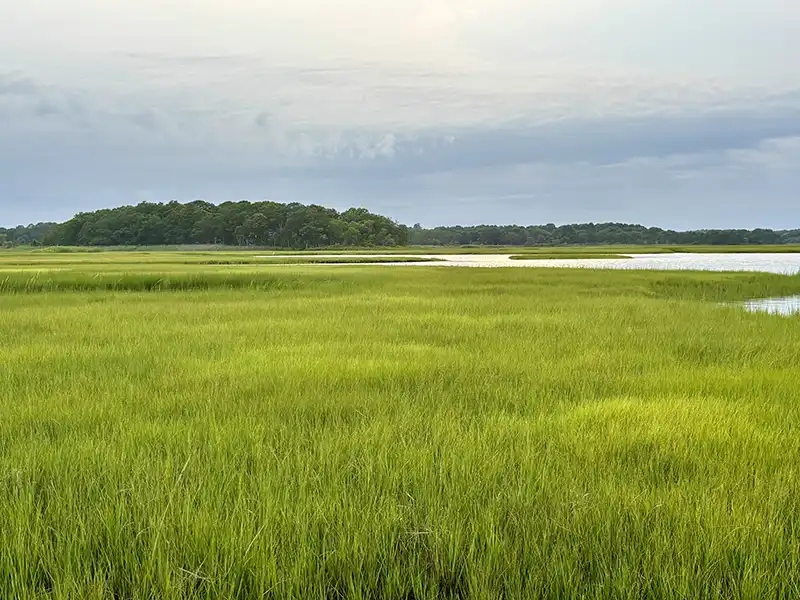
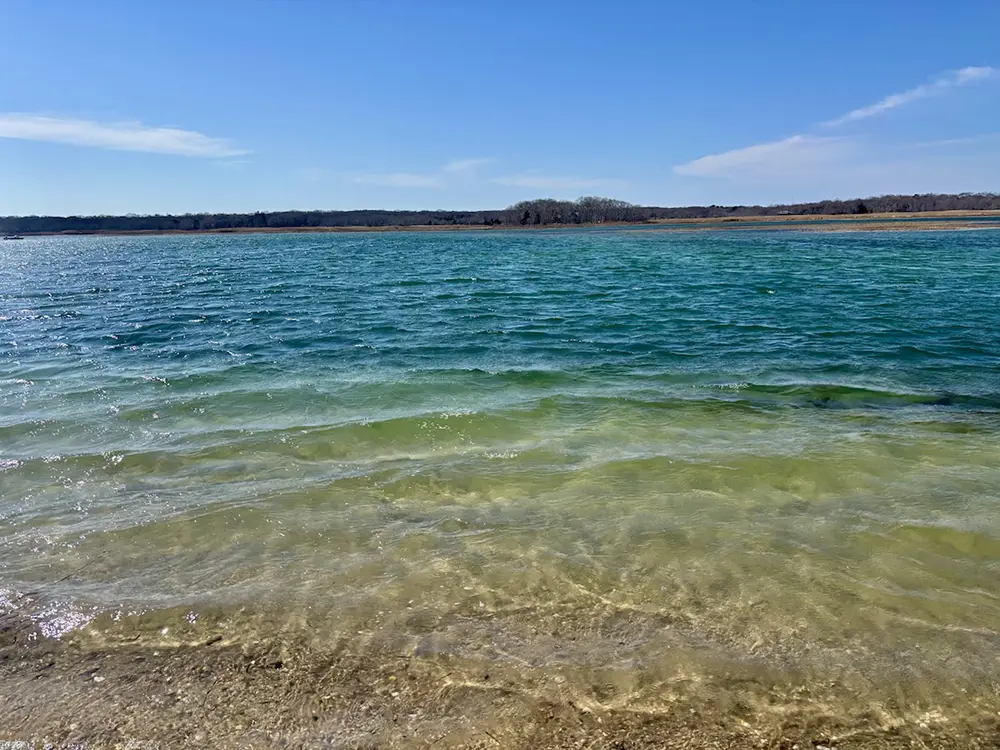
September is a month filled with transitions. The days are shorter, the night sky is changing. Many hummingbirds have left on their challenging migration south. Egrets are congregating in Accabonac Harbor, in preparation for their migration. The winter resident chickadees, nuthatches and titmice are forming small mixed flocks, foraging at the edge of wooded areas and at feeders. It will be colder soon, but there maybe time for a few more swims in Bonac Creek.
Keeping with the theme of transitions, Nicholas Bryan shares the the history of Gerard Drive and Point. William Taylor writes about the changing night skies. Both pieces well timed to help us appreciate the transition to Fall.
But first a few announcements.
-The obituary for Cile Downs, artist, activist and founder of Accabonac Protection Committee was published in last week’s East Hampton Star.http:// https://www.easthamptonstar.com/obituaries/2020917/cile-downs-93-artist-activist
Donations to Accabonac Protection Committee in her memory are suggested. Next month’s APC newsletter will be dedicated to Cile and your memories of Cile.
-Earlier this month, APC hosted a virtual Forum, The Future is Now. The expert presenters were Dr. Christopher Gobler and Dr. Alison Branco. Dr. Gobler has conducted water quality testing for the Trustees for several years and is conducting additional research in 2020. He describes his some of his findings about the levels of contaminats in Accabonac Harbor and the ability of high efficiency on-site septic systems to reduce nitrogen. Dr. Branco speaks about coastal erosion in Accabonac Harbor. She encourages us all to get involved in the CARP meetings Here is the link to the forum.
https://drive.google.com/file/d/1gKorYcXd_7Tb45jXSaTpvzi9IVkUqnhp/view?usp=sharing
-The Trustees, Town staff and volunteers collaborated with Tom Iwanejko of Suffolk County Vector Control on mosquito larval sampling. Positive mosquito larval cluster locations were identified and treated, sparing most of Accabonac Harbor from pesticide treatment. This is a map of the hot spots in 2020. The larger the circle, the more larvae in that location.
Image courtesy of Suffolk County Vector Control
The goal is to get to zero spraying by identifying the physical characteristics of the hot spots that permit the larvae to survive and modifying the hot spots. The goal is not to eliminate all mosquitos. Birds need them for food. We simply want to manage the mosquito population without the use of pesticide to the greatest extend possible.
-Dr Nicole Maher of the Nature Conservancy offered a possible solution. She noted that there are ways to use runnels to accomplish non-invasive marsh restoration. Runnels are narrow channels in the ground that permit liquid to flow through. Dr. Maher has kindly shared the link to the recording Fish and Wildlife’s webinar on August 20th on this subject.
Here is the YouTube link
https://www.youtube.com/watch?v=VnJ138SmyDE
This is a criticalt project for the health of the harbor. More to come on this.
-Annual Beach Clean Up-. The APC board decided not to organize a single date for the clean up due to COVID concerns. We encourage you to pick a place and a time to do your own clean up. Suggestions below for recording your findings if you wish to do so.
https://oceanconservancy.org/trash-free-seas/international-coastal-cleanup/clean-icc-2020/
-Thank you for your membership and support to the Accabonac Protection Committee. Please tell your friends about the Accabonac Protection Committee. We will be happy to add them to our mail list. And, think about making us your preferred charity on Amazon smile. We would appreciate it.
Patrice Dalton, President, APC
Gerard Drive, Accabonac’s Eastern Shore
by Nicholas Bryan , APC Treasurer
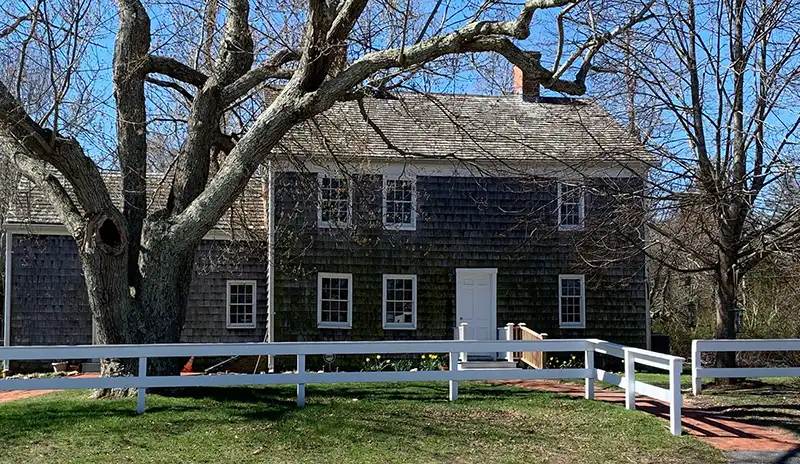
For East Hampton history fans such as myself, Gerard Drive, on what was referred to as Cape Gardiner in The Springs is a source of wonderful material. For lovers of Accabonac Harbor, the Drive which forms its eastern boundary, offers magnificent views of the body of water which is sometimes called Bonac Creek and locally pronounced “crick”. The bonus, if you will, is the sight of Gardiner’s Island across Gardiner’s Bay.
The stories about Accabonac Harbor and Gerard Drive have fascinated me for years. Of particular historic interest to me is the Drive, the road in the Springs, created in the 1930s. It does offer the most spectacular view of the harbor and Gardiners Island, originally named Isle of Wight by the English settlers. When I look at the island from Gerard Drive, I am reminded of all that happened there since Robert Lyon Gardiner first settled it in the 17th century, having received from Britain’s King Charles I a land grant. Earlier, Gardiner had purchased the island from local Native Americans who, it is said, made him an excellent offer in gratitude for his assistance in an intertribal dispute.
From Gerard Drive, one can see the windmill and the main house on the island. The 3,200-acre island has been called the most pristine area of our eastern seaboard.
For as long as I have been a visitor the Springs, Gerard Drive is the most frequent walk I take. I occasionally lead what I boldly describe as “tick-free” hike there during the summer. So, I do have my own relatively brief history on Gerard. For me it evokes earlier times in my life at the beach – times I refer to as “Summer of 42”, referencing the title of a 1971 movie set in an unnamed Long Island beach Community.
Gerard Drive is the road on what is historically called Cape Gardiner. During a feisty nor’easter, the Bay has been known to meet the Harbor. During hurricanes, the Drive has become an island. On both sides are houses ranging from very modest (600 square feet) to larger more recent homes. Due to recent land acquisitions by the Town, the Drive is becoming an even more enchanted place, in part, because it is very slowly reverting back to the Cape that, as Daniel Gerard wrote in his 1935 sales brochure, “except for the road, everything there is as God gave it to the Indians”.
The development of Gerard Drive as a summer community begins in the 1930s. In 1932, Mr. Gerard, a broker from “up island” purchased this mile and a half long spit of land for $125,000. Hoping to develop it, he convinced Town of East Hampton to build a road down the center of the land in exchange for nine acres of parkland that came to be named after his wife, Carolyn Gerard. In the sales brochure he offered 250 lots, most of which were only fifty feet wide. Unfortunately, for Mr. Gerard, the Great Depression of the 1930s and the limited access to the Springs prior to the construction of modern highways, as well as the occasional storms that created inaccessibility, interfered with sales, even though lots sold for $100.00 or less.
So how could it be that the Cape Gardiner is reverting back to the days of Native American occupancy? Gerard Drive probably never should have been developed. In addition to storm caused flooding and rising sea levels, the shallow depth of the land and high-water table make it difficult to deal with domestic sewage in a safe manner. The nitrogen in sewage is extremely detrimental to the surface waters that surround the Drive. Prior to the recent installation of public water, safe drinking water had to be brought in for most homeowners.
In recognition of the threat that development has created on the East End, East Hampton and the four other East End towns have created the Community Preservation Fund, the source of which is two percent transfer tax when real estate is sold. With these funds, the town has purchased parcels of land on Gerard Drive from willing sellers who, as a condition of sale, demolish all structures on the property prior to transfer. When you walk Gerard Drive, you will now see, and if you so choose, may explore properties that are Nature and Community Preserves. For some of us , this “undevelopment ” is a source of great joy. For the waters of Gardiner’s Bay and Accabonac Harbor, the removal of the septic systems from these newly created Preserves, is, what Daniel Gerard might have called, in his day a Godsend.
When we walk Gerard Drive now, we see fewer structures and more open land. We can easily walk from the Harbor to the Bay via these preserves. We can talk with residents, who, like longtime community activist Ray Hartjen, have lived on Cape Gerard since the 1930s. On his property, Merton Edwards ran a fishing station from 1910 until 1930. Some settled there before electricity was available. Some had no indoor plumbing. Some gave up their outhouses at the direction of county officials. Some survived the Hurricane of 1938 and subsequent dramatic storms. Before the recent road work and shore hardening, storms made Gerard impassible
On a cold winter day in the middle of the week, it is possible to walk the Drive without seeing a car. One can feel as though one is experiencing an earlier time. Even the utility poles, like railroad tracks, seem wonderfully timeless and infinite. Birds avail themselves of the perches that the utility wires provide. When you get to Gerard Point at the end, you can look across the inlet to Louse Point and beyond. Should you so desire, you can return via a shore walk along Gardiner’s Bay until you reach Carolyn Gerard Park which provides access to the Drive. Enjoy the serenity. Experience the magic. Remember to turn off your cell phone and other electronic devices.
September Night Skies
by William Taylor, Hampton Observatory Senior Educator and NASA Solar System Ambassador
In the month of September, the night comes at us with a quickening pace, and the hours of darkness first equal the hours of daylight on September 22nd and then surpass them. If you watch the sunset from the same location every day, careful observation will reveal the Sun heading southwards over the course of these early autumn weeks. Shortly after sunset, two bright lights hover over the southern sky – brilliant Jupiter and dimmer Saturn to its left. The Moon will join them on the nights of September 24th and 25th.
Jupiter and Saturn dominate the evening sky of September, but another planet arises after 9 p.m. now and will shrine through the whole night by October – the red world of Mars. To find Mars in mid-September, look to the East around 9 p.m. when it begins to rise. Mars will be exceptionally easy to find on the night of October 2nd, when it will be just over one degree from a nearly full Moon. In October, Mars will make its closest approach to Earth, rising shortly after sunset and shining highest around midnight. These close approaches, or oppositions, happen every two years, and they are by far the best time to examine Mars through a telescope. High-powered eyepieces are needed, but patience is even more necessary – the atmosphere blurs Mars’s appearances, but every so often the turbulence calms and we can get a brief clear image of its surface. With luck, you can see the dark scattered black-sand deserts that stand out against the rust-red plains that dominate the planet, as well as Hellas Basin, one of the largest craters on Mars and the bed of an ancient sea. The tiny Southern ice cap will also pop out in the Martian antarctic regions. The year’s encounter is the closest we’ll get for more than a decade to come – and let’s hope for better weather than we got in 2018, when a giant dust storm spread over the whole planet, marring its view for human astronomers on Earth and ending the mission of the intrepid robot Opportunity, which relied on sunlight for power. Two new rovers are right now flying en route to Mars, the American Perseverance probe, and the Chinese Tianwen-1. With luck, they will land in February, and give us more questions to ask about this most Earth-like of nearby worlds and its ancient history of flowing water.
[Image Credit – Stellarium]
Mars is currently in the constellation of Pisces, a dim fishy pattern that is hard to make out, but it’s also near the very striking constellation of Pegasus. If you draw a line from Mars to the star Deneb in the Swan, the great square of Pegasus should lie on its path. This constellation represents the winged horse who lived with the Muses on the mountain of Helicon – we can see the horse today in profile, but upside down. The snout of Pegasus is marked by the bright star Enif, and we can use that star as a guide to see the globular cluster Messier 15. A globular cluster is a collection of over 100,000 stars swarming around each other much more tightly than the stars in our corner of the galaxy do. Most globular clusters are very old – M15 formed about twelve billion years ago, not long after the universe itself came into being at the Big Bang, 13.8 billion years ago.
[Image Credit – Adam Block/Mount Lemmon SkyCenter/University of Arizona]
Pegasus is joined by one of the corner stars of the square to another constellation, Andromeda. This represents the Ethiopian princess rescued by Perseus from the fate of being eaten by a sea monster. With a simple pair of binoculars, or even with your bare eyes, you can follow one of her out-stretched arms to see faint glowing cloud representing the Andromeda Galaxy. This huge whirlpool of around a trillion stars is a bigger sibling to our own Milky Way, and it is the closest large galaxy to our own. But “close” is relative in astronomy – the light you see from Andromeda began its journey to your eyes some 2.5 million years ago. If any sentient beings live in one of the countless planets of Andromeda, our own Sun would be just one of hundreds of billions contributing to a small, pale, and diffuse glow in their night sky. Their astronomers would require telescopes millions of times more powerful than our own to tease out the individual lights of our Sun and its orbiting planets. But no matter how large their telescope might be, they would as yet see no sign of Homo sapiens. But the photons of light just now reaching Andromeda might include one or two that glinted off the eye of one of our Homo habilis ancestors, carving out a morning meal with stone tools in the brilliant light of the savannah dawn.
[Image Credit – Torben Hansen]