Revetment… or Not
by Margo Hardy
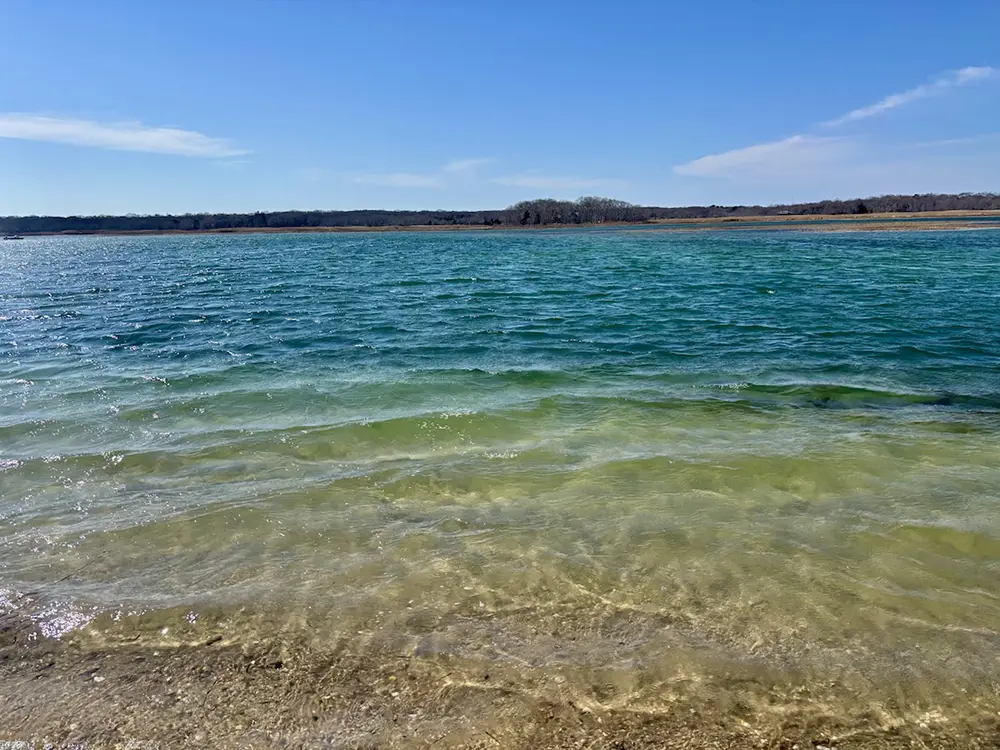
Permission for a 260-foot revetment in front of the two properties immediately at the southeast end of Gerard Drive’s second causeway was requested by the owners at a December hearing before the ZBA. The proposed revetment would continue the line of rocks and concrete chunks dumped over time by the Highway Department along the Gardiners Bay side in front of an old wood bulkhead to protect the causeway road. APC submitted testimony recommending denial on the basis that to allow an exception to the recently passed town code, based on the LWRP (Local Waterfront Revitalization Plan), would create “a precedent that could unleash a domino effect of other similar requests.”
The LWRP recommends designating almost all of the shoreline north of the causeway as eligible for construction or repair of some protective structures, in recognition that most of that area for several miles is already hardened with wood bulkheads or stone rip-rap or revetments. (Worse, there are more than 20 perpendicular structures: wood, cement, or rock groins and jetties between Kings Point and Gerard Point, blocking the normal littoral flow of sand and cobble.) The un-hardened shoreline south of the causeway is designated as natural, and hardening structures are prohibited, except in emergency situations. While town planners acknowledged that hardening up-littoral, or up-current, has contributed to erosion in front of the properties in question, they also stated that the same effect could be expected to continue, damaging properties to the south as a result of new hardening. They recommended denial.
During the hearing, it was argued that if some sort of revetment* is not built at the end of the causeway the shoreline will continue to retreat to the roadway. There is truth in that contention. However, we question whether this should be dealt with by private landowners rather than the Town. The shore dilemma is a knotty one: do nothing, replenish, or harden; APC continues to advocate natural solutions—replenishment and restoration—measures like the replacement of dredged material up-drift on the open beaches. However, it is hoped that further study of these issues will produce better solutions that will be fair and effective. In the meantime, we need to allow our LWRP to guide such decisions.
* Of all the types of shore hardening structures, a properly designed revetment is probably the least damaging. Vertical seawalls and bulkheads reflect wave energy and cause ever-deepening scour in front of them; groins and jetties, which can be wooden or rock and are built perpendicular to the shore, prevent the natural littoral, or along-shore, transport of beach material. A gently sloping, rough-faced revetment absorbs considerable wave energy as the water slides rather than bounces off it.
** See Waves and Beaches, by Willard Bascom and The Beaches are Moving, by Wallace Kaufman and Orrin H. Pilkey, Jr.